
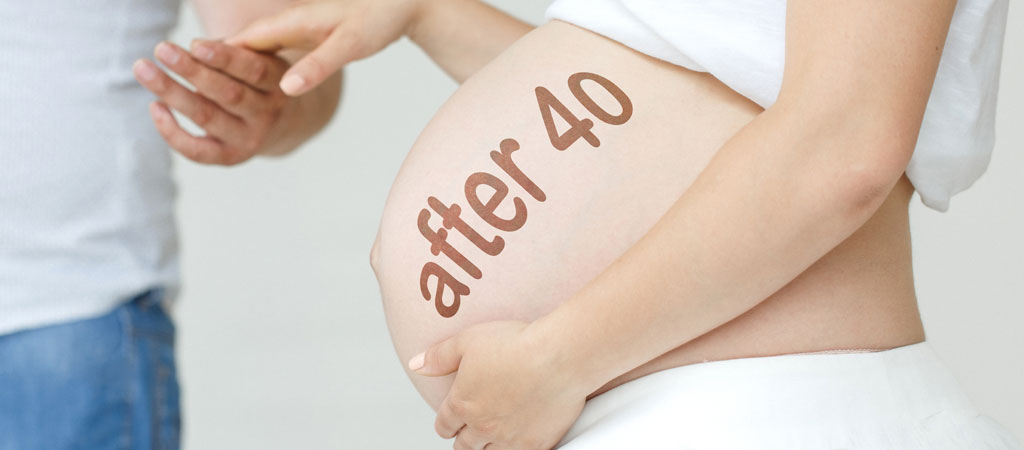
More and more women are choosing to become mothers after the age of 40. Science has made significant progress, and public awareness needs to keep pace.
The chances of getting pregnant after 40—the real numbers
Fertility declines with age—but this doesn’t come to a sudden halt at 40. It is a gradual decline that begins around ages 32–35 and accelerates after age 37. At age 40, a woman with good ovarian reserve still has a significant chance of conceiving—either naturally or with assisted reproduction.
| ~20% chance of natural conception per cycle at age 40 | ~10% chance of natural conception per cycle at age 43 | 40–50% chance of IVF success using one’s own eggs at ages 40–41 |
The most reliable indicator is AMH—a simple blood test that reflects ovarian reserve. This value varies significantly from woman to woman, regardless of age. Age is a factor, but it is not the only factor.
What are the real risks?
A pregnancy after age 40 is medically classified as a high-risk pregnancy. This classification does not mean that something will go wrong, but rather that closer monitoring and a personalized approach are required.
| Factor | What does that mean in practice? | Management |
| Chromosomal abnormalities | Increased risk of trisomy 21 (Down syndrome) | NIPT / Amniocentesis |
| Automatic disqualification | Higher probability compared to the 30s | Close monitoring of the first quarter |
| Gestational diabetes | Increased incidence | Blood sugar curve — timely monitoring |
| Preeclampsia | Higher risk of gestational hypertension | Regular blood pressure monitoring |
| Cesarean section | It is most often deemed necessary | A case-by-case decision |
Starting prenatal care early and undergoing a proper preconception evaluation significantly reduce risks. Women who begin prenatal care early and follow a personalized protocol have notably positive outcomes.
Natural pregnancy or IVF? When is the right time to consider your options?
General medical guidelines recommend 12 months of trying to conceive before undergoing fertility evaluation. After age 40, this timeframe is reduced to 6 months, and in some cases, evaluation is recommended immediately, as a precautionary measure, before attempting to conceive.
The basic first-line tests include AMH measurement, hormonal testing (FSH, LH, E2), an ultrasound to determine the antral follicle count (AFC), and a semen analysis. Based on these results, the most appropriate course of action is determined—natural conception, ovulation induction, or in vitro fertilization.
What do studies show about mothers over 40?
Beyond medical factors, studies show that women who become mothers after age 40 often exhibit greater psychological stability, better financial circumstances, and a deeper bond with their child—factors that positively influence the child’s developmental environment.
Physical condition depends largely on lifestyle. An active 42-year-old woman may have better biological parameters than a sedentary 35-year-old woman.
What science recommends—regardless of age
- Fertility assessment: Even without a specific problem, a basic test (AMH + ultrasound) provides a clear picture of where you stand.
- No unnecessary delay: Every cycle counts after age 40. Early evaluation allows for appropriate action at the right time.
- Egg freezing: For women who aren’t ready yet, egg freezing offers time without sacrificing quality.
- Diet and supplements: Antioxidants, CoQ10, vitamin D, and folic acid have a documented role in egg quality.
- Personalized approach: There is no one-size-fits-all protocol. Treatment selection is based on individual results—not age alone.
| Every case is unique. The first step toward pregnancy after age 40 is a personalized assessment—not general statistics, but your individual situation. → In Vitro Fertilization (IVF) | → Fertility Preservation |