
Sperm Cryopreservation
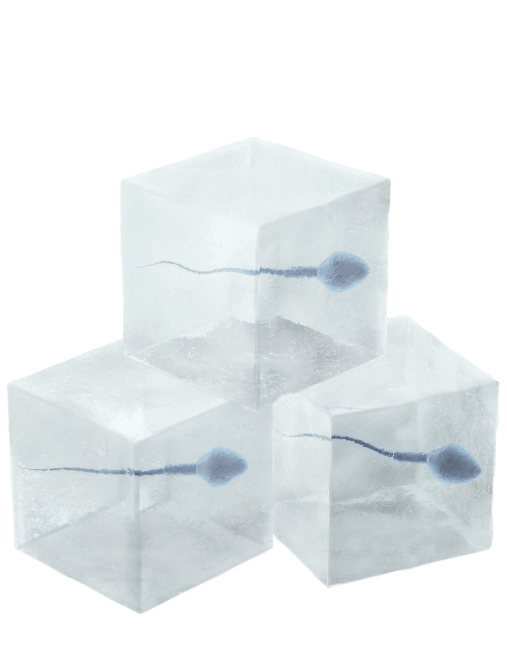
Sperm cryopreservation, also known as sperm freezing, is the process of preserving sperm cells at very low temperatures for future use.
This method is widely used in assisted reproduction and makes it possible to preserve male fertility for a long period of time.
What Is Sperm Cryopreservation?
Sperm cryopreservation is a laboratory method that allows sperm cells to be stored in special liquid nitrogen tanks. Under these conditions, the biological processes of the cells slow down significantly, allowing long-term preservation of sperm without materially affecting its suitability for future fertility treatments.
Sperm freezing is carried out using special protective substances (cryoprotectants), which help protect sperm cells during the freezing and storage process.
When Is Sperm Freezing Recommended?
Sperm freezing may be recommended in various situations when there is a need to preserve fertility or when it is expected that sperm quality or availability may be affected in the future.
Preserving Fertility Before Medical Treatments
Sperm freezing is often recommended before treatments that may affect sperm production, such as chemotherapy or radiotherapy. In this way, the possibility of having children after treatment is preserved.
Before Surgical Procedures
In some cases, surgical procedures involving the reproductive system or other medical interventions may affect fertility. Sperm cryopreservation before such procedures can be a preventive option for preserving reproductive potential.
In Cases of Low Sperm Quality
Sperm freezing may also be used when a low sperm count or reduced sperm quality is observed. In these cases, collecting and storing multiple samples may facilitate their future use in infertility treatments.
For Use in Assisted Reproduction Treatments
Cryopreservation may also be performed before an assisted reproduction cycle so that a sperm sample is available on the day of egg retrieval or fertilization. This can be useful in cases where there may be difficulty collecting a sample on the same day.
The Sperm Freezing Process
The sperm cryopreservation process is carried out in the embryology laboratory and includes specific stages of sample preparation, processing, and storage.
Collection of the Sperm Sample
The sperm sample is usually collected through ejaculation in a designated area of the laboratory. In some cases, collection may also be performed using other medical methods when deemed necessary. After collection, the sample is delivered to the laboratory for the initial evaluation of its basic parameters.
Laboratory Processing and Freezing
In the laboratory, the sample is processed using special cryoprotective substances that help protect sperm cells during the freezing process. The sperm is then placed in special containers and cooled gradually until it reaches very low temperatures.
Storage of Frozen Sperm
After freezing, the samples are stored in liquid nitrogen tanks at a temperature of approximately -196°C. Under these conditions, sperm cells can be preserved for a long period of time and used in future assisted reproduction treatments.
How Long Can Frozen Sperm Be Stored?
Sperm that has undergone cryopreservation can be stored for a long period of time. Storage takes place in special liquid nitrogen tanks at a temperature of approximately -196°C, where the biological processes of the cells slow down significantly.
Under these conditions, sperm cells can be preserved for many years. International literature has reported pregnancies and live births using sperm that had remained frozen for a long period of time.
When the sperm is to be used in fertility treatment, the sample is thawed in the laboratory and re-evaluated to assess its basic parameters before it is used in the fertilization process.
Use of Frozen Sperm in Fertility Treatments
Depending on the couple’s needs and the characteristics of the sperm, the frozen sample may be used in different treatment methods.
Intrauterine Insemination (IUI)
In intrauterine insemination, sperm cells that have been processed in the laboratory are placed directly into the uterus at the time of ovulation. This method is usually used when sperm quality is normal or shows only mild issues.
In Vitro Fertilization (IVF)
Frozen sperm can also be used in IVF cycles. After appropriate laboratory processing of the sample, the sperm cells are placed together with the eggs so that fertilization can take place and embryos can be created for transfer to the uterus.
Intracytoplasmic Sperm Injection (ICSI)
In cases involving a severe male factor in infertility, the intracytoplasmic sperm injection (ICSI) technique may be applied. In this procedure, a single sperm cell is selected by the embryologist and injected directly into the egg, increasing the chances of fertilization.

Frequently Asked Questions (FAQ)
The cryopreservation process may affect a small percentage of sperm cells, as some do not survive after thawing. However, with modern cryopreservation techniques and the use of cryoprotective substances, a significant number of viable sperm cells are preserved and can be used in fertility treatments.
Usually, more than one sample is collected and frozen so that there is a sufficient quantity of sperm for future use. Freezing is carried out in separate containers, allowing the samples to be used in different treatment cycles if needed.
Abstinence from ejaculation for about 2 to 5 days before sample collection is usually recommended. This helps optimize sperm parameters for freezing.
Frozen sperm can be thawed and used when an assisted reproduction treatment is scheduled. The process is carried out in the embryology laboratory before fertilization.
The cost of sperm cryopreservation may vary depending on the assisted reproduction center and the services included in the process. It usually includes the cost of freezing the sample as well as an annual storage fee for keeping it in special cryopreservation tanks.
Get a second opinion! Schedule an appointment