
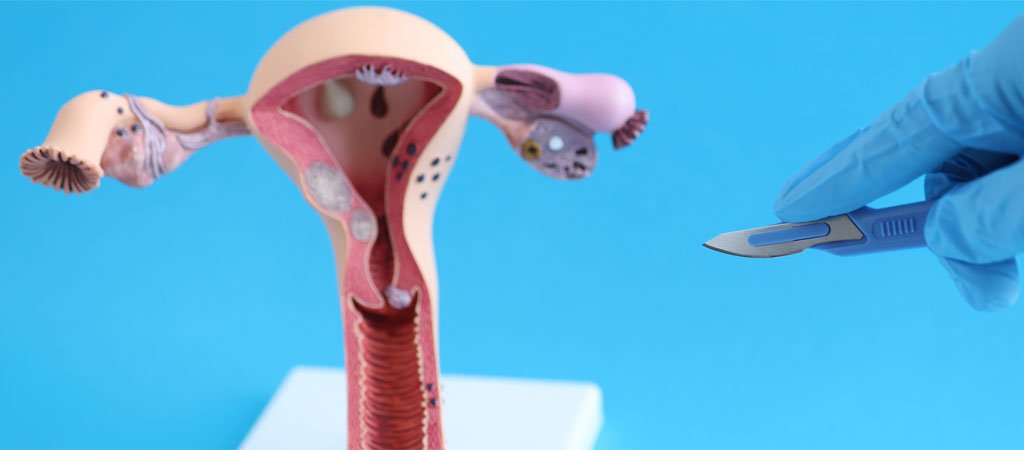
Diagnosing a cyst does not always require hasty decisions
Hearing the diagnosis “ovarian cyst” often causes anxiety and concern for any woman. The first thought of many patients—and often the immediate recommendation—is prompt surgical removal. However, as we have discussed, the vast majority of cysts are benign and often resolve on their own.
The rush to take a patient to the operating room without the necessary monitoring and thorough evaluation can lead to unnecessary medical interventions with permanent consequences.
A common mistake: The unnecessary removal of healthy ovarian tissue
Unfortunately, in my daily medical practice, I very often encounter cases of women who underwent surgery for a simple or benign cyst, resulting in the removal of a significant portion of the ovary itself or, in extreme cases, the entire ovary (oophorectomy).
The ovary is an extremely delicate organ. When a surgeon lacks the necessary expertise in microsurgery and tissue preservation, the attempt to remove the cyst can damage the adjacent healthy ovarian tissue.
The consequences of ovarian tissue loss
The removal of a significant portion of the ovary is not a minor side effect. It has a direct impact on a woman’s health:
- Decline in Ovarian Reserve: A woman’s ability to produce healthy eggs declines dramatically, which can significantly complicate a future natural conception or in vitro fertilization.
- Hormonal Disorders: The ovaries produce the primary female hormones (estrogen and progesterone). Damage to them can lead to early menopause, changes in the menstrual cycle, and effects on overall health.
The Safety Net of Egg Freezing Before Major Surgery
When, following a proper evaluation, surgery is deemed absolutely necessary (such as in cases of large cysts, extensive endometriosis, or when the problem is present in both ovaries), preserving the woman’s fertility must be a top priority.
No matter how skilled the surgeon may be or how flawlessly a laparoscopic cystectomy is performed, any surgical intervention on ovarian tissue is likely to cause an inevitable reduction in ovarian reserve. At this critical juncture, egg cryopreservation (egg freezing) prior to surgery is the most important medical recommendation.
Why Should You Seek a Second Opinion?
The decision to undergo surgery is one of the most important decisions you will ever make regarding your body. Seeking a second opinion from a specialized gynecologic surgeon is not a matter of debate, but an inalienable right of every patient to protect her health and fertility.
A second opinion can offer you:
- Avoiding unnecessary surgery: Confirmation of whether the cyst actually needs to be removed or if it can be managed conservatively with close monitoring.
- The right surgical approach: If surgery is the only option, discussing the method is crucial. The goal should be cystectomy (i.e., removal of only the cyst’s “wall”) and the complete preservation of the healthy ovarian tissue.
- Full disclosure: Thorough analysis of the ultrasound findings and the level of risk.
Laparoscopic Cystectomy with Preservation of the Ovary
When surgery is medically necessary (e.g., for large cysts, endometriomas that affect fertility, or suspicious findings), laparoscopic cystectomy is the method of choice.
Using specialized instruments and techniques (such as carefully detaching the cyst wall and avoiding extensive use of diathermy, which “burns” the ovary), the specialized surgeon removes the problem while leaving the ovary intact and functional. This minimally invasive approach also ensures minimal postoperative pain and a rapid recovery.
Frequently Asked Questions (FAQ)
Accordion content: Absolutely not. The medical community encourages seeking second opinions, especially before surgery. A competent healthcare professional understands the patient’s need to feel completely safe and confident about the treatment she will undergo.
It is not necessary for all women, but it depends on the type and size of the cyst, your medical history, your age, and your remaining ovarian reserve (AMH). A second opinion will evaluate this information and safely guide you on whether cryopreservation is a necessary step before surgery.
For the vast majority of benign cysts (such as endometriomas, dermoid cysts, or large serous cysts), yes. The technique of laparoscopic cystectomy allows for the removal of the cyst alone. Removal of the entire ovary or a large portion of it is medically justified only in very specific cases, such as strong suspicion of malignancy or in postmenopausal women.
Ovarian reserve indicates the number of available eggs in your ovaries and is measured using the AMH (Anti-Müllerian Hormone) test. Before any ovarian surgery in women of reproductive age, the doctor must take this indicator into account so that the surgical technique chosen does not cause an irreversible decline in the patient’s fertility.
The term “large” is relative. Even in cysts measuring 7–10 centimeters, if the ultrasound findings indicate that they are completely benign and do not cause acute symptoms (such as torsion or rupture), there is enough time—even just a few days—to schedule a visit for a second opinion, to ensure that the surgery is performed in the most protective way for your ovaries.